

ELD
FMCSA moves to codify English proficiency requirements for truck drivers
August 8, 2026


FMCSA Proposes Permanent English Language Proficiency Requirements for Truck Drivers
FMCSA moves to make English proficiency rules permanent
The Federal Motor Carrier Safety Administration (FMCSA) is moving to formally codify English Language Proficiency (ELP) requirements for commercial motor vehicle (CMV) drivers.
On August 7, 2026, U.S. Transportation Secretary Sean P. Duffy announced that FMCSA is moving forward with a proposed rule that would make current English proficiency enforcement standards part of federal regulations. The goal is to establish a permanent, nationwide standard for determining when a commercial driver fails to meet English language requirements.
The proposal comes as FMCSA continues stricter enforcement of English proficiency requirements for truck drivers. According to the agency, more than 26,000 drivers have already been placed out of service for failing ELP requirements since stricter enforcement was reinstated.
For drivers and motor carriers, the message is clear: English proficiency is not simply a communication issue. It can directly affect a driver's ability to remain in service.
What is English language proficiency (ELP)?
Federal regulations have required commercial drivers to meet English language proficiency standards for decades.
Under the existing requirements, a driver must be able to communicate sufficiently in English and understand information necessary to safely operate a commercial motor vehicle.
This includes the ability to:
- Read and understand English;
- Speak and communicate with law enforcement and safety officials;
- Understand highway traffic signs and signals;
- Respond appropriately during roadside inspections.
The purpose of the requirement is safety. A commercial driver needs to understand instructions from inspectors and recognize important road signs while operating a large commercial vehicle.
FMCSA specifically highlights signs such as “Steep Grade,” “Runaway Truck Ramp,” and “Do Not Enter” as examples of information drivers must be able to understand.
What happens if driver fails the English proficiency evaluation?
Under the enforcement standard FMCSA is seeking to codify, a driver who cannot sufficiently read or speak English or understand highway traffic signs and signals can be placed Out-of-Service (OOS).
This means the driver cannot continue operating the commercial motor vehicle until the applicable issue is resolved.
FMCSA has already been enforcing ELP requirements more strictly. The agency reports that more than 26,000 drivers have been removed from service after failing English proficiency checks.
A real-world FMCSA Safety Measurement System record also shows an ELP failure being recorded as a Driver Fitness violation and an OOS violation under 49 CFR 391.11(b)(2).
Why is FMCSA proposing new rule?
FMCSA says the proposed rule is intended to turn the current enforcement approach into a formal federal regulation.
According to the agency, federal English proficiency standards for commercial drivers have existed since 1937. However, a 2016 policy limited inspectors' ability to place drivers out of service solely because of an English proficiency failure. FMCSA says the Department reinstated stricter enforcement in April 2025.
The new rulemaking would make the standard more difficult for future administrations to weaken.
FMCSA identifies three major goals:
1. Permanent federal standard
The proposed rule would establish inability to understand basic road signs or communicate with law enforcement as an OOS violation in federal regulations.
2. Consistent enforcement nationwide
FMCSA wants the same standard to be applied across the United States rather than having significant differences in enforcement between states.
3. Stronger enforcement near the U.S.-Mexico border
The proposal also addresses drivers entering the United States through the southern border. FMCSA says drivers who do not sufficiently read or speak English could be stopped and placed out of service before continuing farther into the country.
Is the new English requirement already final?
No.
This is one of the most important points for drivers and carriers.
FMCSA's announcement concerns a proposed rulemaking, not a final rule. The Notice of Proposed Rulemaking has been published in the Federal Register, and a public comment period is part of the process before final implementation.
However, drivers should not interpret this to mean that English proficiency requirements are currently optional.
ELP requirements already exist under federal regulations, and FMCSA has been actively enforcing them. The proposed rule is intended to formally codify and strengthen the enforcement framework.
What should truck drivers do now?
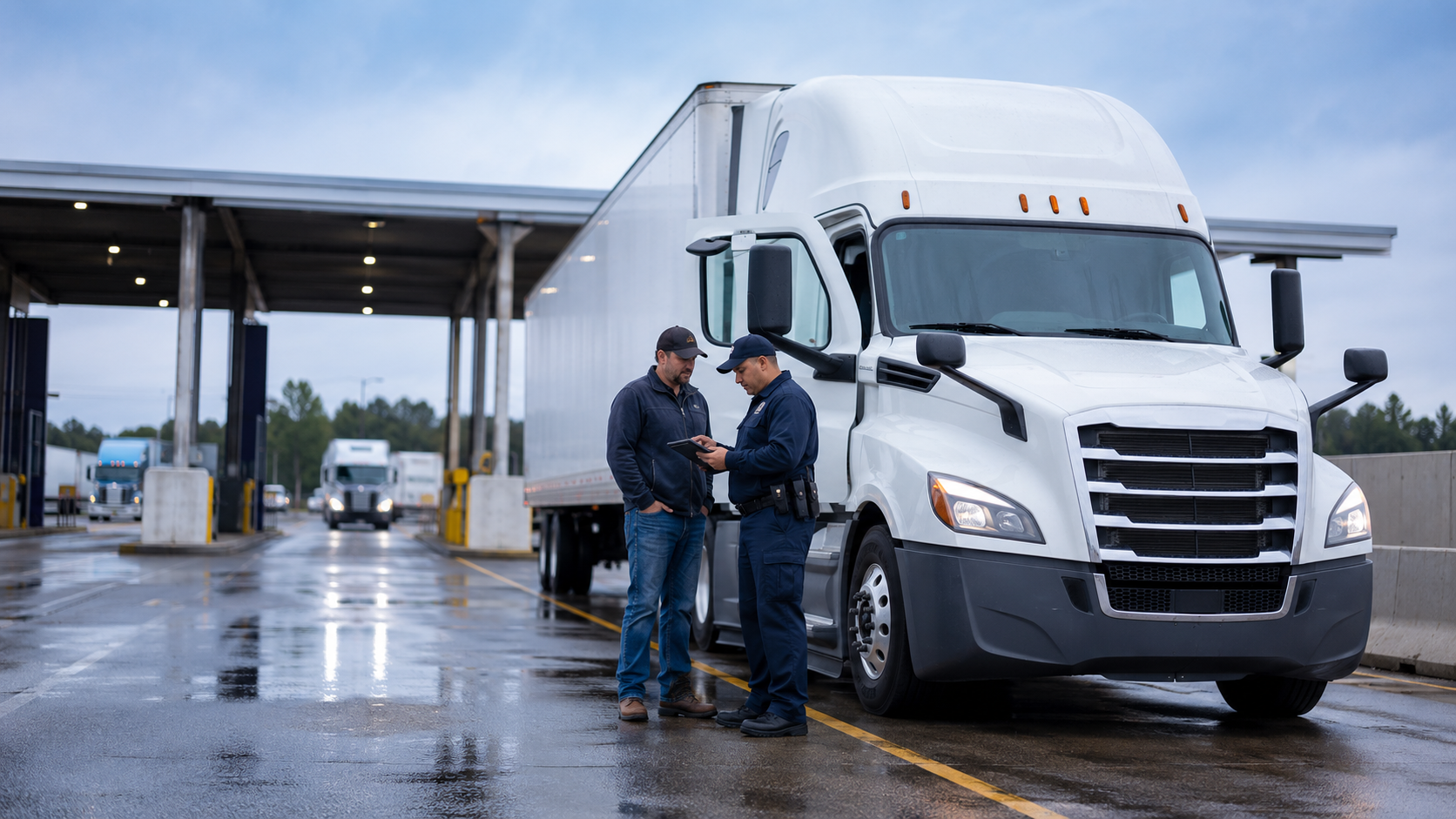
Drivers who operate commercial motor vehicles should make sure they can comfortably handle basic English communication during a roadside inspection.
A driver may need to:
- Answer an inspector's questions;
- Understand instructions from law enforcement;
- Read and understand highway traffic signs;
- Explain basic information about the vehicle and trip;
- Communicate clearly during an inspection.
For drivers who are not confident in English, preparing before an inspection can be especially important.
Learning common roadside inspection vocabulary, understanding U.S. traffic signs, and practicing basic communication with inspectors can help reduce the risk of failing an English proficiency evaluation.
What does this mean for motor carriers?
Motor carriers should also pay attention to the proposed rule.
ELP compliance can become part of a broader driver qualification and safety management strategy. Companies may want to review how they evaluate English proficiency during driver onboarding and whether their drivers are prepared for roadside inspections.
Carriers should also monitor FMCSA updates because the current proposal could change before a final rule is issued.
ELP compliance and ELD compliance
English proficiency is separate from Electronic Logging Device (ELD) compliance, but both are important parts of operating a compliant commercial fleet.
An ELD helps drivers and carriers accurately record Hours of Service (HOS) information and maintain required electronic records. English proficiency requirements, meanwhile, focus on the driver's ability to communicate and understand safety-related information.
For carriers, compliance should therefore be viewed as a complete system that includes:
- ELD compliance;
- Hours of Service compliance;
- Driver qualification;
- Vehicle maintenance;
- Roadside inspection readiness;
- English Language Proficiency.
Keeping these areas under control can help reduce compliance risks and keep drivers on the road.
Bottom line for truckers
FMCSA's latest proposal sends a clear message: English Language Proficiency remains a serious compliance issue for commercial drivers in the United States.
More than 26,000 drivers have already been placed out of service for failing ELP requirements, according to FMCSA. The agency is now seeking to turn its current enforcement standards into a formal, nationwide federal rule.
The proposal is not yet final, but drivers and carriers should already be prepared for continued ELP enforcement.
For truckers, knowing English is not only about communication. It can be an important part of staying compliant, passing roadside inspections, and remaining on the road.
Stay compliant. Stay informed. Stay on the road with Motion ELD.
What's next

Appreciation week
September 8, 2026
National truck Driver Appreciation week 2026
Happy National Truck Driver appreciation week from the Motion ELD team. National Truck Driver Appreciation Week returns September 13–19, 2026, honoring the millions of professional drivers who keep America moving every day.
DOT
September 3, 2026
Fewer DOT Inspections, More OOS violations: What carriers need to know in 2026
FMCSA data shows that roadside inspections are down in 2026, but out-of-service violations have reached a five-year high. Learn how carriers can stay inspection-ready with Motion ELD.

ELD
August 26, 2026
5 ELD mistakes that can cost your fleet money
However, simply having an ELD installed does not guarantee that your fleet is protected from compliance problems or unnecessary costs. Here are five common ELD mistakes that can create risks for your fleet.