
ELD
AI Fleet management 2026: AI dashcams & Fleet analytics
July 14, 2026


Discover how AI dashcams, predictive maintenance, and driver behavior analytics help fleets reduce costs, improve safety, and stay compliant in 2026. Learn how Motion ELD brings AI-powered fleet management together.
How AI dashcams, predictive maintenance, and driver analytics are transforming fleet operations
The trucking industry has always been driven by technology. From paper logbooks to Electronic Logging Devices (ELDs), every innovation has helped fleets become safer, more efficient, and more profitable.
Now, another transformation is underway.
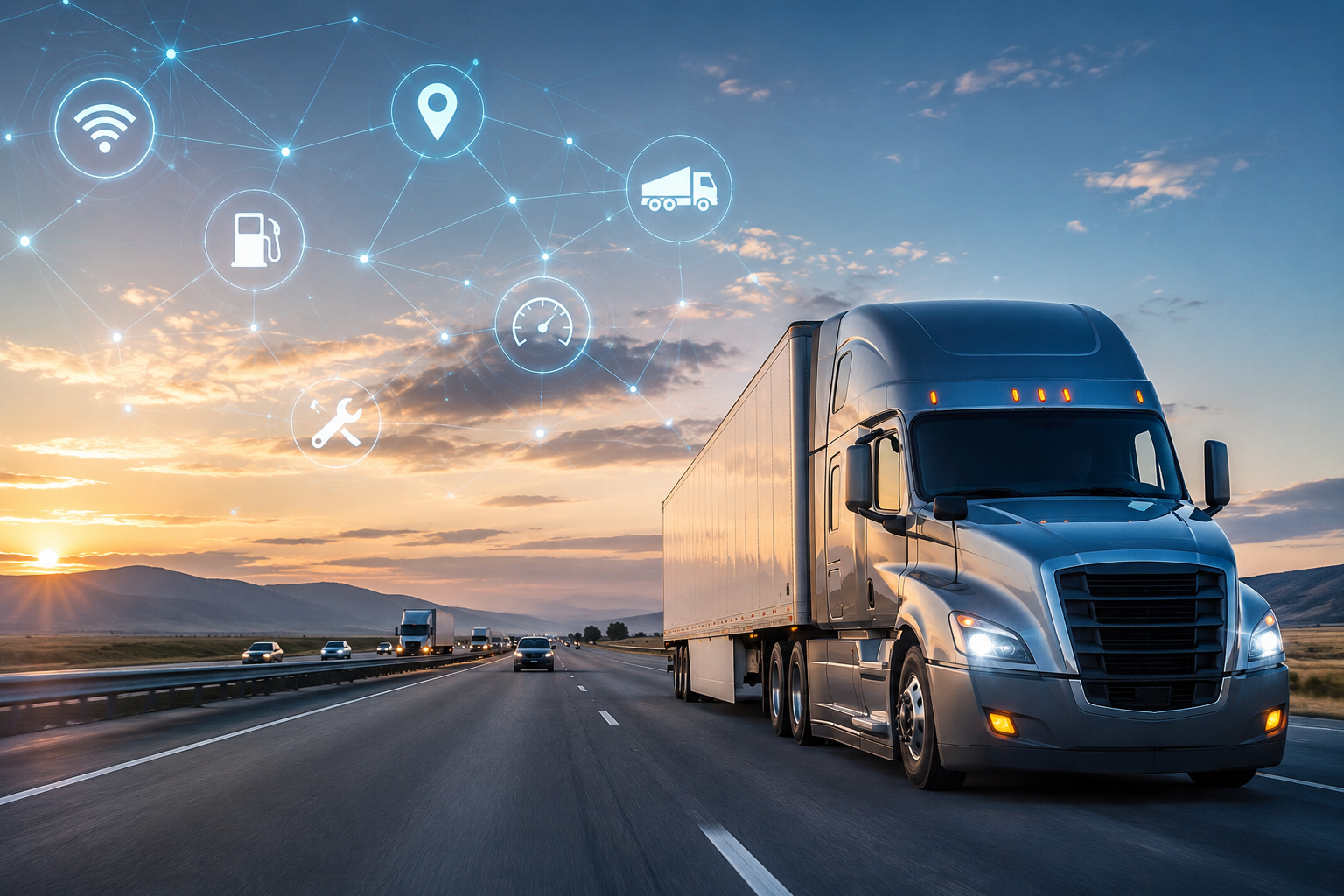
In 2026, AI fleet management is no longer a futuristic concept-it's becoming an operational necessity. Rising insurance premiums, increasing labor costs, stricter safety expectations, and ongoing driver shortages are pushing carriers to adopt intelligent technologies that improve decision-making in real time.
Modern artificial intelligence can monitor driving behavior, identify maintenance issues before they become breakdowns, optimize fuel consumption, and even predict operational risks before they impact a fleet.
Instead of simply collecting data, AI now helps fleets understand what that data means and what actions should be taken next.
For fleet managers, this means fewer accidents, lower operating costs, improved CSA scores, and higher equipment uptime.
For drivers, it means safer working conditions, fewer unnecessary violations, and less paperwork.
At Motion ELD, we believe AI should simplify fleet management-not complicate it. Today's AI-powered fleet solutions combine compliance, telematics, video safety, and predictive analytics into one intelligent platform that helps carriers make smarter business decisions every day.
Why AI became the fleet standard in 2026
Several years ago, artificial intelligence was considered an expensive feature available only to enterprise carriers with thousands of trucks.
That is no longer the case.
Cloud computing, edge AI, affordable smart cameras, and more powerful ELD platforms have made AI technology accessible to fleets of every size.
Several factors accelerated this shift.
Rising insurance costs
Insurance premiums continue to increase across North America.
Insurers increasingly reward fleets that use:
- AI dashcams
- Driver coaching systems
- Real-time safety monitoring
- Video-based accident reconstruction
Many insurance providers now offer discounts because AI significantly reduces fraudulent claims while improving driver accountability.
Driver shortages increase pressure
Finding qualified CDL drivers remains one of the industry's biggest challenges.
Instead of replacing drivers, AI helps companies support them.
Modern AI systems can:
- identify fatigue indicators
- detect distracted driving
- monitor following distance
- recognize aggressive braking
- alert drivers before dangerous situations develop
Rather than waiting until after an accident occurs, fleets receive actionable insights that prevent incidents from happening.
Compliance is becoming more data-driven
FMCSA compliance continues evolving beyond simple Hours of Service monitoring.
Today's successful carriers combine:
- ELD compliance
- GPS tracking
- vehicle diagnostics
- safety events
- inspection history
- AI-generated driver scores
This provides fleet managers with a complete operational picture rather than isolated reports.
Instead of asking:
"Did the driver violate HOS?"
Managers can ask:
"Why is this driver becoming higher risk?"
That shift represents one of the biggest advantages of AI-powered fleet management.
Artificial intelligence reduces human work
Fleet managers spend countless hours reviewing:
- dashcam footage
- speeding reports
- harsh braking alerts
- maintenance schedules
- idle reports
- DVIR inspections
AI dramatically reduces this workload.
Instead of reviewing thousands of events manually, intelligent systems automatically prioritize only the incidents requiring attention.
For example:
A fleet with 120 trucks may generate over 20,000 safety events each week.
Traditional review methods require several employees.
AI can automatically filter out false positives and highlight only the highest-risk situations.
Managers spend less time reviewing data—and more time improving operations.
AI Dashcams: How computer vision detects real risks
One of the most visible advances in AI fleet management 2026 is the rapid adoption of intelligent dash cameras.
Unlike traditional dashcams that simply record video, AI dashcams continuously analyze the road in real time using computer vision algorithms.
They don't just record accidents.
They help prevent them.
What modern AI dashcams can detect
Today's AI cameras recognize dozens of safety events automatically.
Examples include:
- distracted driving
- mobile phone usage
- driver fatigue
- eyes off the road
- seat belt violations
- tailgating
- unsafe lane changes
- harsh braking
- speeding
- forward collision risks
- pedestrian detection
Instead of sending every video clip to the safety department, AI determines whether an event actually requires review.
Reducing false alerts
Older camera systems generated enormous numbers of unnecessary alerts.
Drivers quickly became frustrated.
Managers stopped reviewing reports.
Modern AI dramatically improves accuracy.
For example, today's computer vision systems distinguish between:
- looking at a side mirror
- checking blind spots
- looking down at a phone
This significantly reduces false positives while improving driver acceptance.
Real-time driver coaching
One of the biggest advantages of AI dashcams is immediate feedback.
Instead of waiting days for a safety review, drivers receive alerts within seconds.
Examples include:
- "Increase following distance."
- "Reduce speed."
- "Eyes on the road."
- "Lane departure detected."
Instant coaching allows drivers to correct unsafe behavior before it results in an accident.
Video evidence protects drivers
AI cameras don't only identify risky behavior.
They also protect professional drivers from false claims.
Video evidence can quickly demonstrate:
- another vehicle caused the collision
- unsafe passenger vehicle behavior
- improper merging
- road hazards
- weather conditions
- traffic violations by other motorists
This often shortens insurance investigations and reduces litigation costs.
Why fleets are investing in AI dashcams
Fleet managers increasingly view AI cameras as an investment rather than an expense.
Benefits include:
- fewer preventable accidents
- lower insurance costs
- reduced claim disputes
- improved CSA performance
- better driver coaching
- stronger safety culture
When combined with ELD data, GPS tracking, and telematics, AI dashcams provide a complete understanding of fleet performance.
This integration is becoming one of the core pillars of AI fleet management in 2026.
What's next

Appreciation week
September 8, 2026
National truck Driver Appreciation week 2026
Happy National Truck Driver appreciation week from the Motion ELD team. National Truck Driver Appreciation Week returns September 13–19, 2026, honoring the millions of professional drivers who keep America moving every day.
DOT
September 3, 2026
Fewer DOT Inspections, More OOS violations: What carriers need to know in 2026
FMCSA data shows that roadside inspections are down in 2026, but out-of-service violations have reached a five-year high. Learn how carriers can stay inspection-ready with Motion ELD.

ELD
August 26, 2026
5 ELD mistakes that can cost your fleet money
However, simply having an ELD installed does not guarantee that your fleet is protected from compliance problems or unnecessary costs. Here are five common ELD mistakes that can create risks for your fleet.