
DOT
Fewer DOT Inspections, More OOS violations: What carriers need to know in 2026
September 3, 2026


FMCSA data shows that roadside inspections are down in 2026, but out-of-service violations have reached a five-year high. Learn how carriers can stay inspection-ready with Motion ELD.
Fewer Inspections, more violations: Why every DOT Inspection matters more in 2026
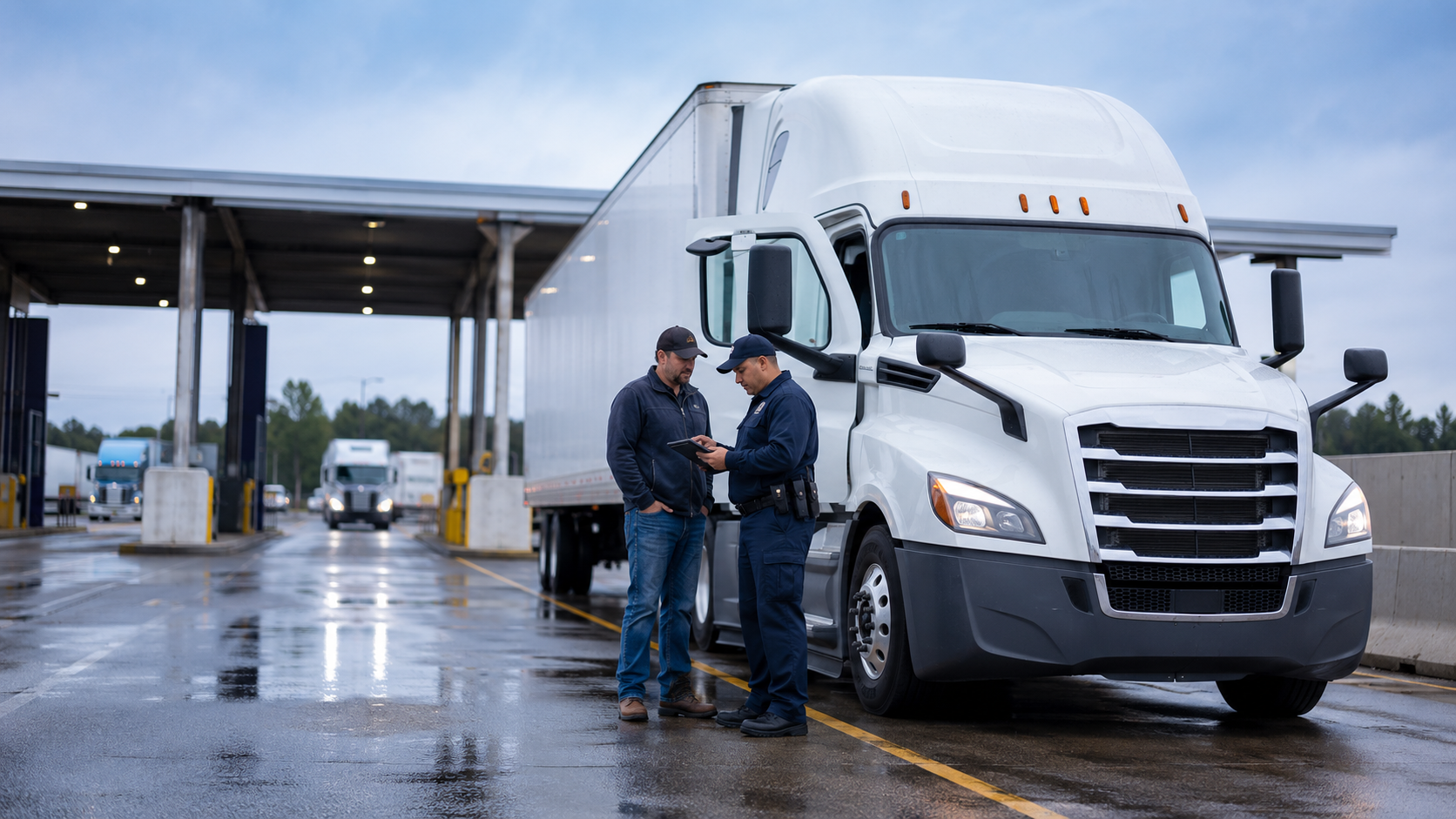
Many carriers and truck drivers feel as though roadside inspections are becoming more frequent. However, the latest numbers tell a different story.
According to FMCSA inspection data through July 31, 2026, the total number of inspections was approximately 3% lower than during the same period last year.
But fewer inspections do not necessarily mean less enforcement.
The percentage of inspections resulting in at least one out-of-service violation reached 21.91% in 2026. That means more than one in five inspections uncovered a violation serious enough to place a driver or vehicle out of service—the highest rate recorded in the past five years.
The real change is not how often trucks are being inspected. It is what happens once an inspection begins.
Roadside Inspections are producing more findings
In previous years, a driver might have been stopped, had their paperwork reviewed, answered a few questions, and been cleared to continue.
Today, inspections appear to be producing more violations:
- 58.10% of inspections resulted in at least one violation.
- 21.91% resulted in at least one out-of-service violation.
- The average number of violations per inspection increased to 1.88.
These figures suggest that carriers should not treat a lower inspection count as a reason to relax their compliance procedures.
Inspections may happen less frequently, but every inspection carries a greater risk of exposing incomplete logs, Hours of Service violations, vehicle defects, or problems transferring ELD data.
Why ELD readiness matters at the scale
During a roadside inspection, the driver must be able to provide accurate records of duty status and transfer the required ELD data to the safety official.
Problems can arise when:
- Logs are incomplete or inaccurate.
- Unidentified driving events have not been resolved.
- Driver certifications are missing.
- Hours of Service violations remain uncorrected.
- The driver does not know how to activate inspection mode.
- ELD records cannot be transferred successfully.
- The device loses connection or fails during the inspection.
Even if a fleet has avoided problems in the past, relying on previous experience is not a compliance strategy.
A driver who says, “I got through the inspection last year,” may face a very different level of scrutiny today.
What drivers should check before an inspection
Roadside inspection readiness should begin before the truck reaches a weigh station.
Drivers and fleet managers should regularly confirm that:
1. Logs Are Complete and accurate
Drivers should review their records of duty status, resolve unidentified driving events, add required annotations, and certify their logs.
2. Hours of Service are monitored
Drivers need a clear view of their available driving time, shift limits, break requirements, and cycle hours. Potential violations should be identified before they become roadside problems.
3. ELD data can be transferred
Drivers should know how to transfer their ELD records through the supported FMCSA methods. Waiting until an inspector requests the data is not the right time to learn the process.
4. Inspection mode Is easy to access
The information an inspector needs should be available quickly without exposing unrelated fleet or personal information.
5. The ELD Is working reliably
The device, mobile application, vehicle connection, and required diagnostic functions should all operate correctly. Any ELD malfunction must be documented and handled according to FMCSA requirements.
6. Vehicle documents and Inspections are current
ELD compliance is only one part of a roadside inspection. Drivers should also verify their registration, insurance, medical certification, permits, DVIR records, lights, tires, brakes, and cargo securement.
Prepare for every inspection to matter
The 2026 data sends a clear message: carriers should not prepare for fewer roadside stops. They should prepare for every stop to receive closer attention.
Motion ELD helps drivers and fleet managers maintain accurate electronic logs, monitor Hours of Service, access inspection-ready records, and transfer required data when requested.
With Motion ELD, inspection readiness means:
- Clean and accurate logs
- Clear Hours of Service visibility
- Fast access to inspection mode
- Quick ELD data transfer
- Reliable device performance
- Fewer surprises at the scale
When an inspector asks for your records, the process should be simple, fast, and professional.
Be ready before the next roadside inspection
A roadside inspection should not begin with uncertainty about missing logs, remaining hours, or whether the ELD transfer will work.
Prepare before the truck reaches the scale.
Choose Motion ELD and give your drivers the tools they need to handle every inspection with confidence.
Contact Motion ELD today to learn more or request a free trial.
Data referenced in this article is based on FMCSA Motor Carrier Management Information System information available through July 31, 2026. Inspection outcomes may reflect targeted enforcement, changing enforcement priorities, carrier compliance levels, or a combination of these factors.
What's next

Appreciation week
September 8, 2026
National truck Driver Appreciation week 2026
Happy National Truck Driver appreciation week from the Motion ELD team. National Truck Driver Appreciation Week returns September 13–19, 2026, honoring the millions of professional drivers who keep America moving every day.

ELD
August 26, 2026
5 ELD mistakes that can cost your fleet money
However, simply having an ELD installed does not guarantee that your fleet is protected from compliance problems or unnecessary costs. Here are five common ELD mistakes that can create risks for your fleet.

ELD
August 22, 2026
Automatic emergency braking in 2026: What truck fleets need to know
Automatic Emergency Braking (AEB) is becoming an increasingly important part of truck safety technology in the United States. The system uses sensors and cameras to detect a potential collision and can automatically apply the brakes when the driver does not react in time.