
ELD
DVIR requirements 2026: Electronic driver vehicle inspection reports
June 25, 2026


Learn what a DVIR is, how to complete pre-trip and post-trip inspections, avoid violations, and manage electronic DVIR reports with Motion ELD in 2026.
DVIR requirements 2026: What every CDL driver needs to know about vehicle inspections
Meta Description: Learn what a DVIR is, how to complete pre-trip and post-trip inspections, avoid violations, and manage electronic DVIR reports with Motion ELD in 2026.
As FMCSA enforcement continues to focus on vehicle safety and compliance, Driver Vehicle Inspection Reports (DVIRs) remain a critical requirement for motor carriers and CDL drivers in 2026. A properly completed DVIR helps identify defects before they become safety hazards, reduces the risk of roadside violations, and supports a carrier's overall CSA performance.
For drivers, safety managers, and fleet owners, understanding DVIR requirements is essential for maintaining compliance and keeping vehicles operating safely. With the growing adoption of electronic inspection tools, managing DVIRs has become faster and more efficient than ever before.
In this guide, we'll cover everything you need to know about DVIR requirements in 2026, including pre-trip and post-trip inspections, common violations, and how electronic DVIR systems simplify compliance.
What Is a DVIR and why is it important?
A Driver Vehicle Inspection Report (DVIR) is a record completed by a commercial driver to document the condition of a vehicle and identify any defects that could affect safe operation.
DVIR requirements are established under 49 CFR §396.11, which outlines inspection and reporting obligations for commercial motor vehicle operators.
The purpose of a DVIR is straightforward:
- Improve highway safety
- Detect mechanical issues early
- Reduce breakdowns and accidents
- Ensure FMCSA compliance
- Create a maintenance record for fleets
By documenting vehicle defects and repairs, carriers can demonstrate that they are actively maintaining their equipment and addressing safety concerns.
A thorough DVIR process not only helps avoid penalties but also protects drivers, cargo, and the public.
Pre-trip vs. Post-trip inspection: What's the difference?
Although both inspections are part of the DVIR process, they serve different purposes.
Pre-trip inspection
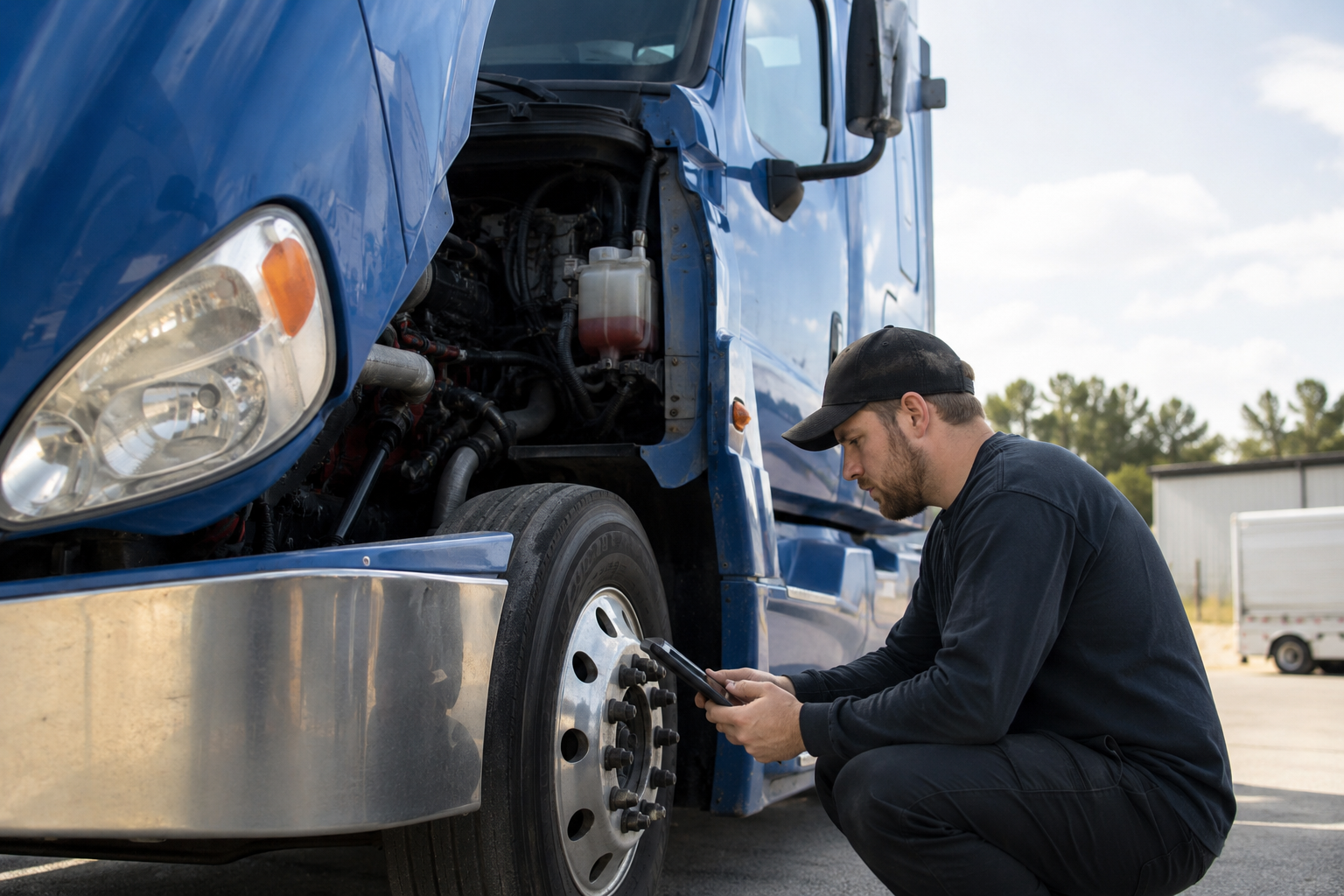
A pre-trip inspection is performed before starting a route.
The driver's goal is to verify that the vehicle is safe to operate and that no obvious defects exist.
Key areas include:
- Brakes
- Tires
- Steering components
- Lights
- Mirrors
- Coupling devices
- Emergency equipment
Identifying problems before departure can prevent costly roadside breakdowns and violations.
Post-trip inspection
A post-trip inspection is completed at the end of the driver's workday.
This inspection focuses on identifying issues that developed during operation.
Examples include:
- Tire damage
- Air leaks
- Lighting failures
- Brake issues
- Trailer defects
Documenting these issues allows maintenance personnel to schedule repairs before the next trip.
Consistent post-trip inspections play a major role in preventive maintenance programs and overall fleet safety.
DVIR checklist: What drivers should inspect
A complete DVIR should cover all major vehicle systems.
Cab components
Drivers should inspect:
- Steering wheel and steering system
- Mirrors
- Windshield and wipers
- Horn
- Dashboard warning lights
- Seat belts
Any malfunction affecting vehicle control should be documented immediately.
Brake system
Brake-related violations are among the most common findings during DOT inspections.
Inspect:
- Air brake operation
- Brake chambers
- Brake hoses
- Slack adjusters
- Brake linings
Even minor brake issues can lead to significant safety risks.
Tires and wheels
Check for:
- Proper tire inflation
- Tread depth
- Sidewall damage
- Missing lug nuts
- Wheel cracks
Tire-related defects frequently result in out-of-service violations.
Lighting equipment
Verify that all lights are functioning properly:
- Headlights
- Brake lights
- Turn signals
- Clearance lights
- Marker lights
Lighting issues are among the easiest violations to prevent.
Coupling devices
Inspect:
- Fifth wheel assembly
- Locking mechanism
- Kingpin
- Air lines
- Electrical connections
Coupling failures can have severe consequences on the road.
Trailer inspection
Review:
- Trailer doors
- Cargo securement devices
- Landing gear
- Trailer floor condition
- Trailer lighting
Drivers should never assume trailer equipment is in proper condition without inspection.
Many fleets now use digital inspection checklists to ensure consistency and improve recordkeeping. Electronic DVIR systems eliminate missed inspection items and reduce paperwork.
DVIR violations, penalties, and compliance risks in 2026
Failure to complete DVIR requirements can expose both drivers and carriers to compliance risks.
Common violations include:
- Missing DVIR documentation
- Failure to report defects
- Inaccurate inspection records
- Operating unsafe equipment
These violations can impact CSA scores and increase scrutiny during future roadside inspections.
| Violation | Possible Consequence |
|---|---|
| Missing DVIR | DOT citation |
| Unreported defect | Increased liability |
| Critical safety defect | Out-of-service order |
| Repeated violations | Higher CSA score |
When a defect exists but was not documented, carriers may face additional liability in the event of an accident.
For this reason, safety managers increasingly rely on electronic DVIR systems to ensure inspection records are completed accurately and retained properly.
Electronic DVIR vs. Paper DVIR: Which is better?
Traditional paper DVIRs have been used for decades, but many fleets are now transitioning to digital solutions.
Paper DVIR
Advantages:
- Familiar process
- No electronic device required
Challenges:
- Lost paperwork
- Manual filing
- Difficult record retrieval
- Higher risk of incomplete reports
Electronic DVIR
Advantages:
- Faster inspections
- Built-in checklists
- Photo documentation
- Automatic record storage
- Easier FMCSA compliance
- Instant access for safety managers
Electronic systems also improve communication between drivers, dispatchers, maintenance teams, and compliance personnel.
For growing fleets, digital inspections offer significant operational advantages over paper-based processes.
How to complete DVIR using Motion ELD
Modern compliance solutions simplify the inspection process.
With Motion ELD, drivers can complete electronic DVIRs directly from their mobile device.
The process typically involves:
Step 1: Open the DVIR section
Access the inspection module inside the Motion ELD application.
Step 2: Select the vehicle
Choose the truck and trailer being inspected.
Step 3: Complete the checklist
Review all required inspection items and record findings.
Step 4: Add notes and photos
If defects are identified, drivers can attach comments and photos for maintenance teams.
Step 5: Submit the report
Inspection results are transmitted instantly.
Step 6: Store records automatically
All reports remain accessible for future review and compliance purposes.
By replacing paper forms with electronic workflows, Motion ELD helps drivers complete inspections more efficiently while supporting FMCSA compliance requirements.
Frequently asked questions
Is DVIR required every day?
Drivers should perform vehicle inspections daily and document defects as required under FMCSA regulations.
What happens if I don't complete DVIR?
Missing inspection reports can lead to violations, DOT citations, and increased compliance risk for both drivers and carriers.
Can I use an electronic DVIR instead of paper?
Yes. FMCSA allows electronic DVIR systems as long as they meet applicable recordkeeping requirements.
How long should DVIR records be retained?
Carriers should retain inspection and maintenance documentation according to FMCSA record retention requirements and internal compliance policies.
Final thoughts
DVIR compliance remains a fundamental part of fleet safety and FMCSA compliance in 2026. Consistent vehicle inspections help carriers identify defects early, reduce roadside violations, improve CSA performance, and maintain safer operations.
As the trucking industry continues moving toward digital compliance management, electronic DVIR solutions are becoming the preferred choice for fleets of all sizes.
Looking for a simpler way to manage inspections? Motion ELD includes built-in electronic DVIR functionality that allows drivers to complete pre-trip and post-trip inspections directly from the app while keeping records organized, accessible, and FMCSA-compliant. 🚛
What's next

Appreciation week
September 8, 2026
National truck Driver Appreciation week 2026
Happy National Truck Driver appreciation week from the Motion ELD team. National Truck Driver Appreciation Week returns September 13–19, 2026, honoring the millions of professional drivers who keep America moving every day.
DOT
September 3, 2026
Fewer DOT Inspections, More OOS violations: What carriers need to know in 2026
FMCSA data shows that roadside inspections are down in 2026, but out-of-service violations have reached a five-year high. Learn how carriers can stay inspection-ready with Motion ELD.

ELD
August 26, 2026
5 ELD mistakes that can cost your fleet money
However, simply having an ELD installed does not guarantee that your fleet is protected from compliance problems or unnecessary costs. Here are five common ELD mistakes that can create risks for your fleet.